BLOG · 21 Aug 2026

Food court POS in India: centralised billing, split KOTs, Token Display

← All notes

Walk a food court in a metro mall and you already know the gap. The guest wants pizza from one counter and biryani from another. Each stall has its own notepad or a cheap local POS. The court operator — or the guest — is left to add two GST bills, two FSSAI lines, and a payment that never quite matches what the kitchens cooked.

What “proper billing” has been missing

India’s food courts are not a single restaurant and not quite a franchise row. Typical pain: no one bill, KOTs leak across stalls, pickup is shouting, and GST / FSSAI need to stay per stall on one invoice. Generic café POS assumes one kitchen. Food-court operators need centralised billing with many stations.

How QuickKOT runs the court

On Premium or Enterprise, billing model Centralised: one POS at the court counter, many kitchen stations. Categories are pinned to a stall. An order for biryani + pizza splits: MSB only gets biryani; Chicago Delights only gets pizza. The guest still pays once — cash, card, UPI, or a split.
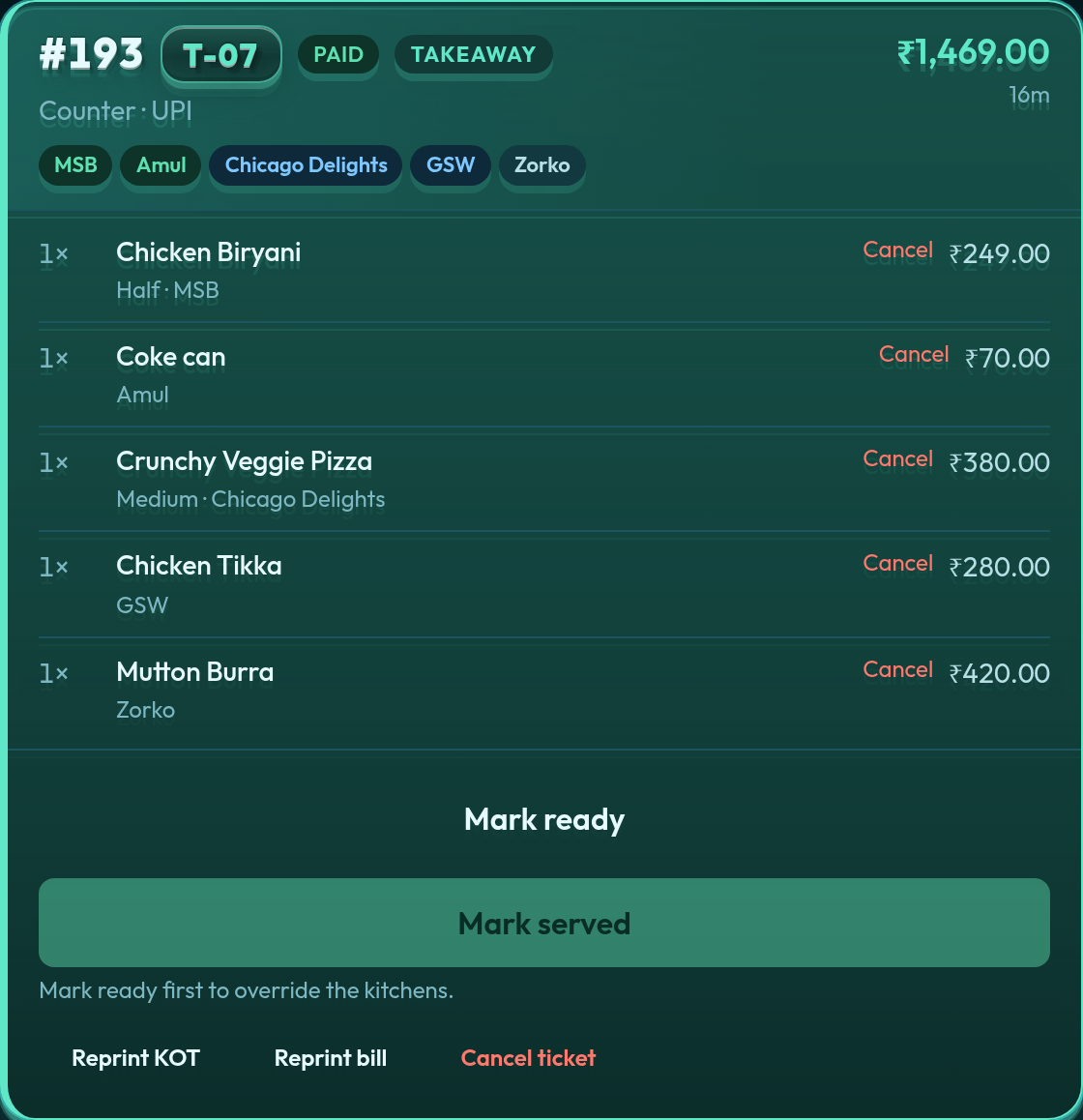
Food court manager ticket in Aqua with all stall stations
Court manager ticket in Aqua: All stations — MSB, Amul, Chicago Delights, GSW, Zorko. One takeaway, token T-07, then Mark served.
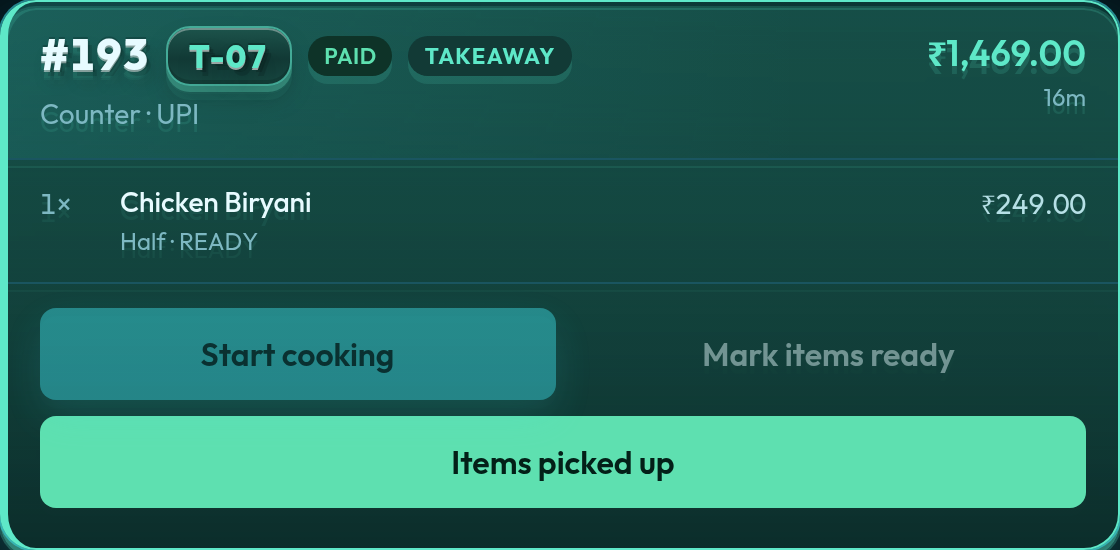
Food court stall kitchen ticket in Aqua — MSB biryani only
The stall tablet: MSB kitchen ticket. Chicken Biryani only. Start cooking, mark ready, items picked up.

Station logins see only their kitchen display. The court manager does not mark served until every stall has handed off. That is the opposite of a shared WhatsApp group.

Token Display

Food courts live on tokens, not table numbers. After payment the ticket carries a token (for example T-07). Token Display is the public pickup board: a kitchen appears next to the token when that stall marks items ready. Guests watch one screen instead of three stall TVs.
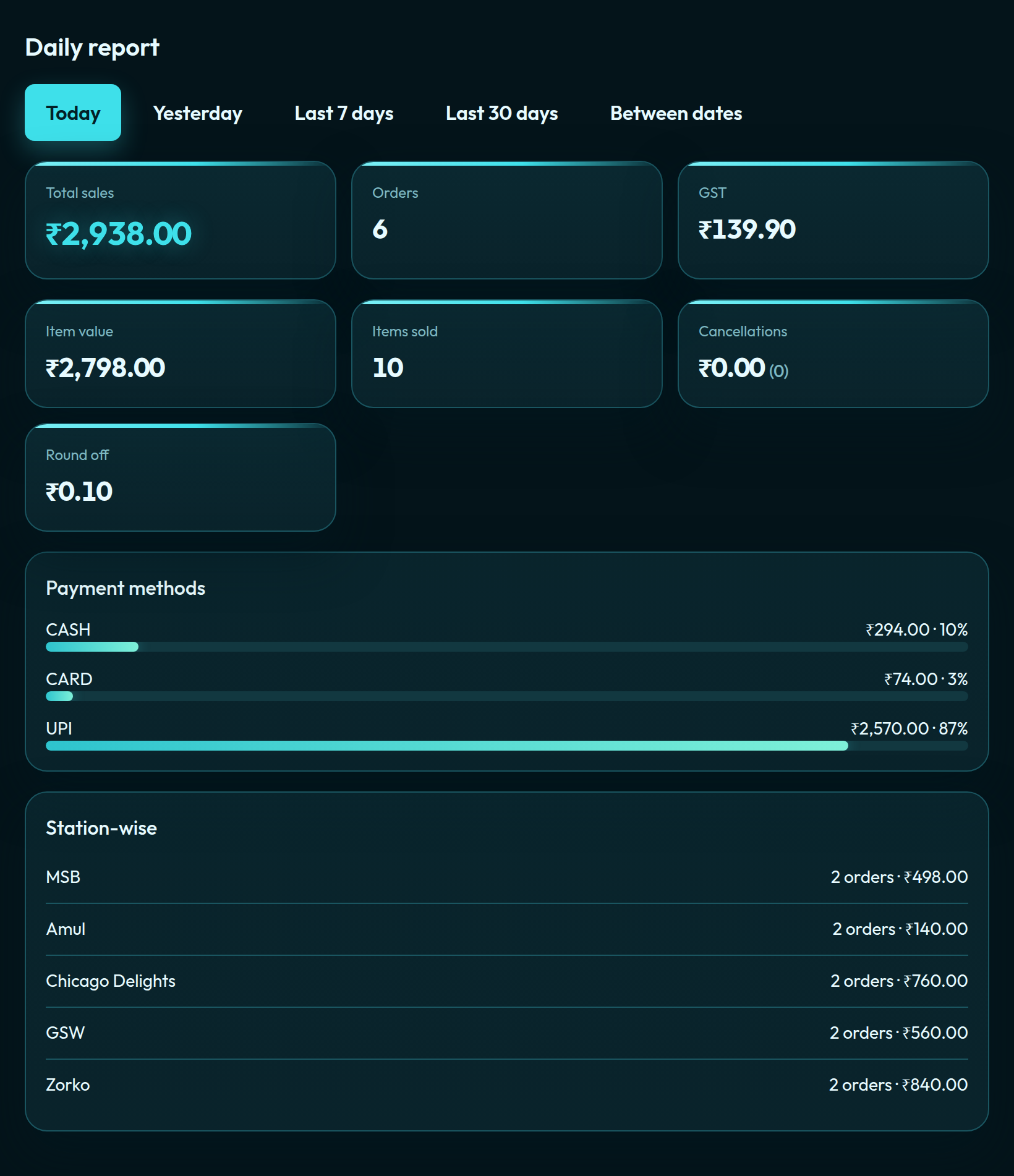
Food court daily report in Aqua with stall-wise sales
After close: total sales, GST, UPI / card / cash, then stall-wise sales for MSB, Amul, Chicago Delights, GSW, Zorko.

QuickKOT is built as the food court POS with centralised billing in India — the same model hotels use when several restaurants share one guest check. Guests who should not queue at every stall can use the QR menu on the same tickets. After close, stall-wise sales are not the same as paying the vendor — that is vendor payout settlement.

Self-serve signup is opening soon. Leave your details at app.quickkot.com/signup, see plans, or write to support@quickkot.com.

More from the floor: Kitchen prep time: measure the clock from ticket to ready · Vendor payout settlement for food courts, canteens, and hotels · Merge and split restaurant tables on POS

Testimonial

From the floor

Q: What was managing Shimla QoH Food Court like before QuickKOT?

A: We run eleven stalls, so things can get pretty busy, especially during rush hours. Before QuickKOT, it felt a bit all over the place because guests had to pay at different desks, and the queues would slow everything down.

Q: What changed after using QuickKOT?

A: The whole process became much simpler. Guests can order biryani from one kitchen and pizza from another, but it still comes together as one bill. That made ordering easier for customers and handling orders easier for us.

Q: How has the Token Display helped?

A: It has made pickup a lot smoother. People just take a number, watch the screen, and collect their food when it is ready — no more shouting names across the hall.

Q: What about the QR menu?

A: The QR menu has helped too. Guests can scan, build their order, and come to the counter when they are ready, which takes a lot of pressure off the stalls.

Q: Overall, how would you describe the impact?

A: QuickKOT has made the entire food court feel calmer, smoother, and easier to manage. The rush is still there, but now it is much more organized.

Shimla QoH Food Court shimlafoodcourt.com

Open a restaurant in a few minutes.

Google or email signup on app.quickkot.com. Start on Basic, upgrade when the floor needs KDS, reports, or more kitchens.

Create your POS